CREATIVE AGENCY
A 1945 bungalow reimagined to accommodate a creative agency office.
Pune, India | 2,400 sq ft | Office Interior
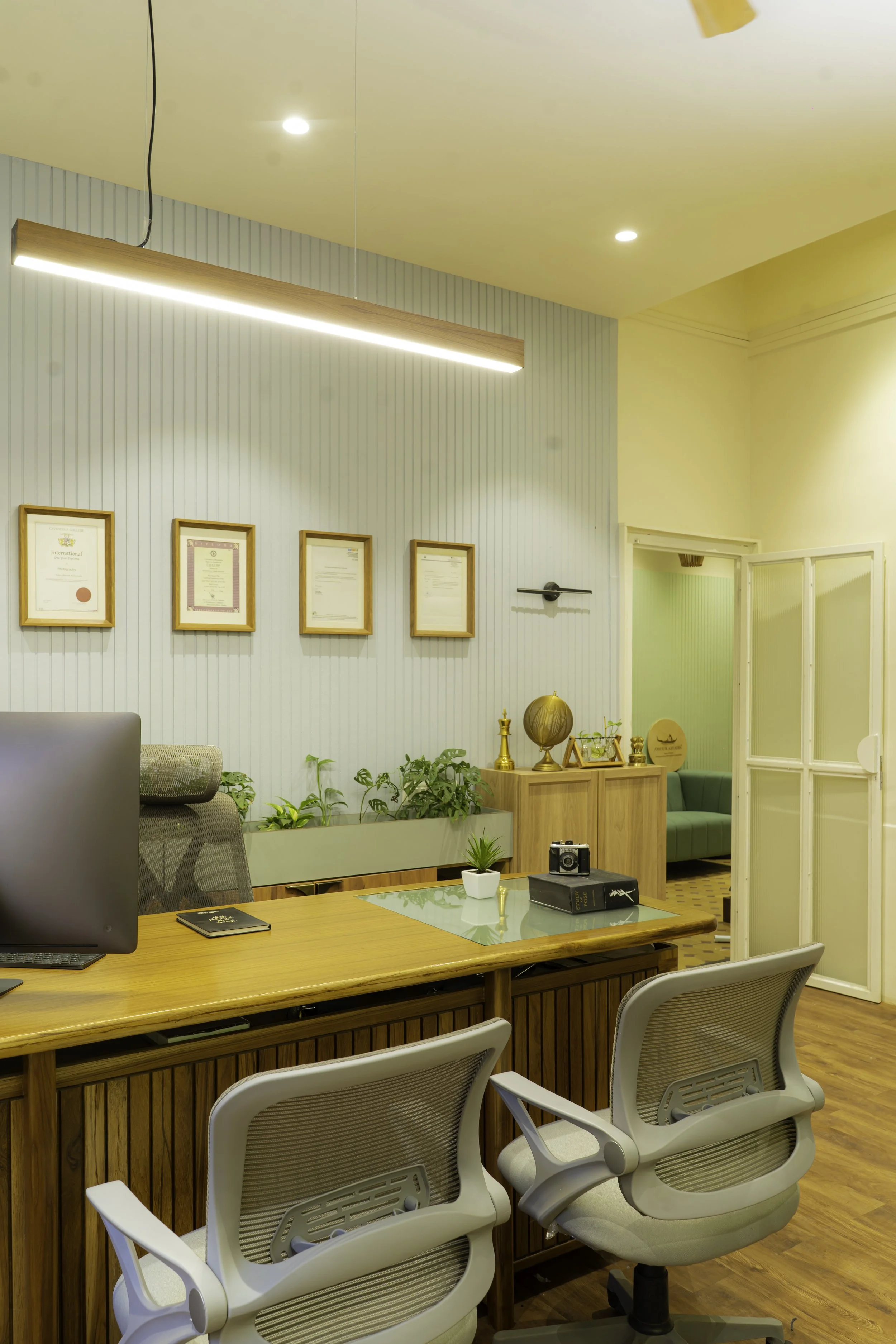
Set within a 1949 heritage bungalow in the heart of Pune, this 2,400 sq ft project reimagines a residential structure as a contemporary office for a creative agency with an in-house photography studio. The design approach focused on adaptive reuse — retaining as much of the original architectural character as possible while carefully inserting modern work infrastructure.
Given the existing load-bearing structure, the intervention strategy was intentionally restrained. Civil additions and structural encroachments were kept to a minimum, with planning decisions working around the original wall grid rather than against it. This ensured structural integrity while preserving the bungalow’s proportions, wall thicknesses, and window placements — all of which contribute to its spatial identity.
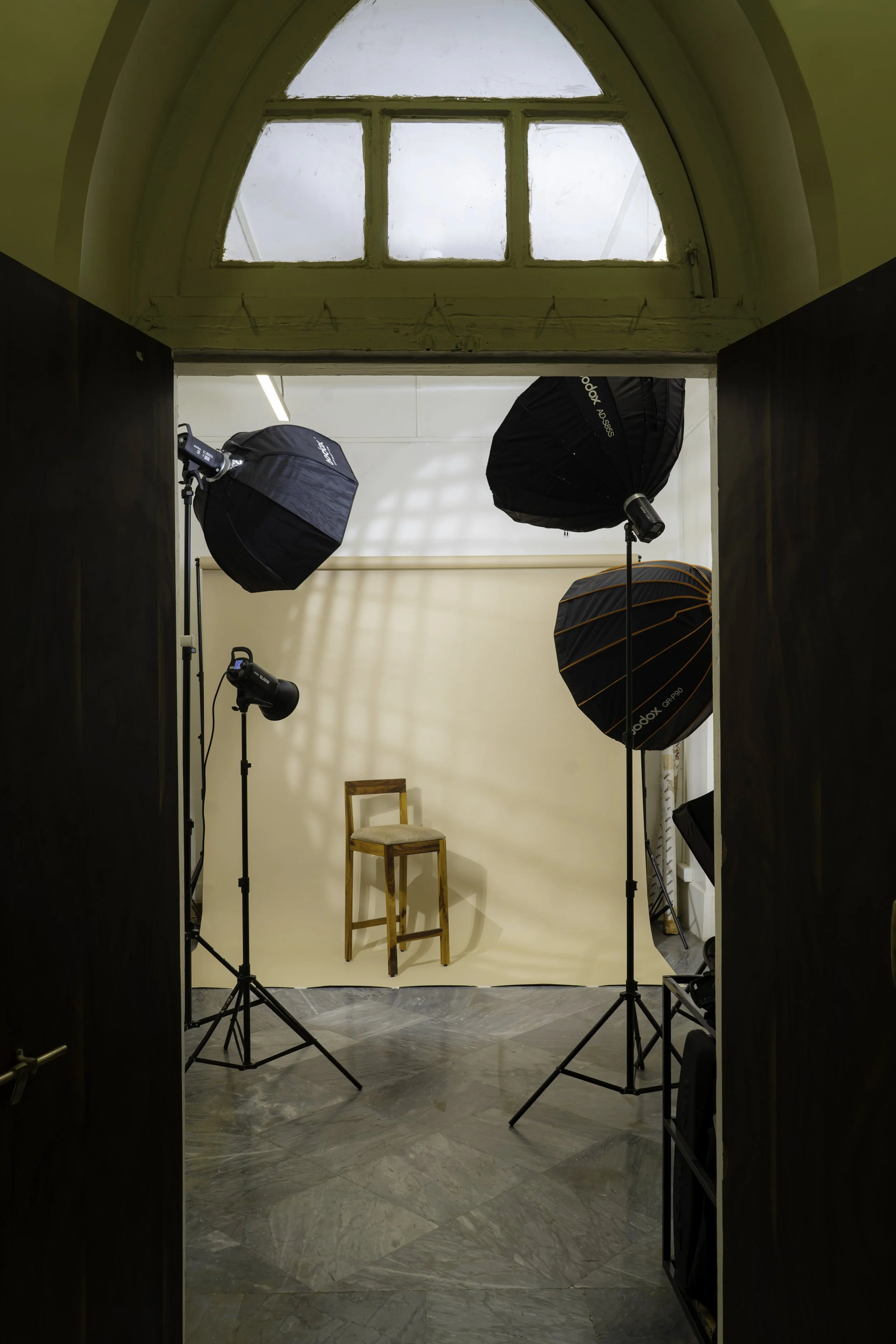
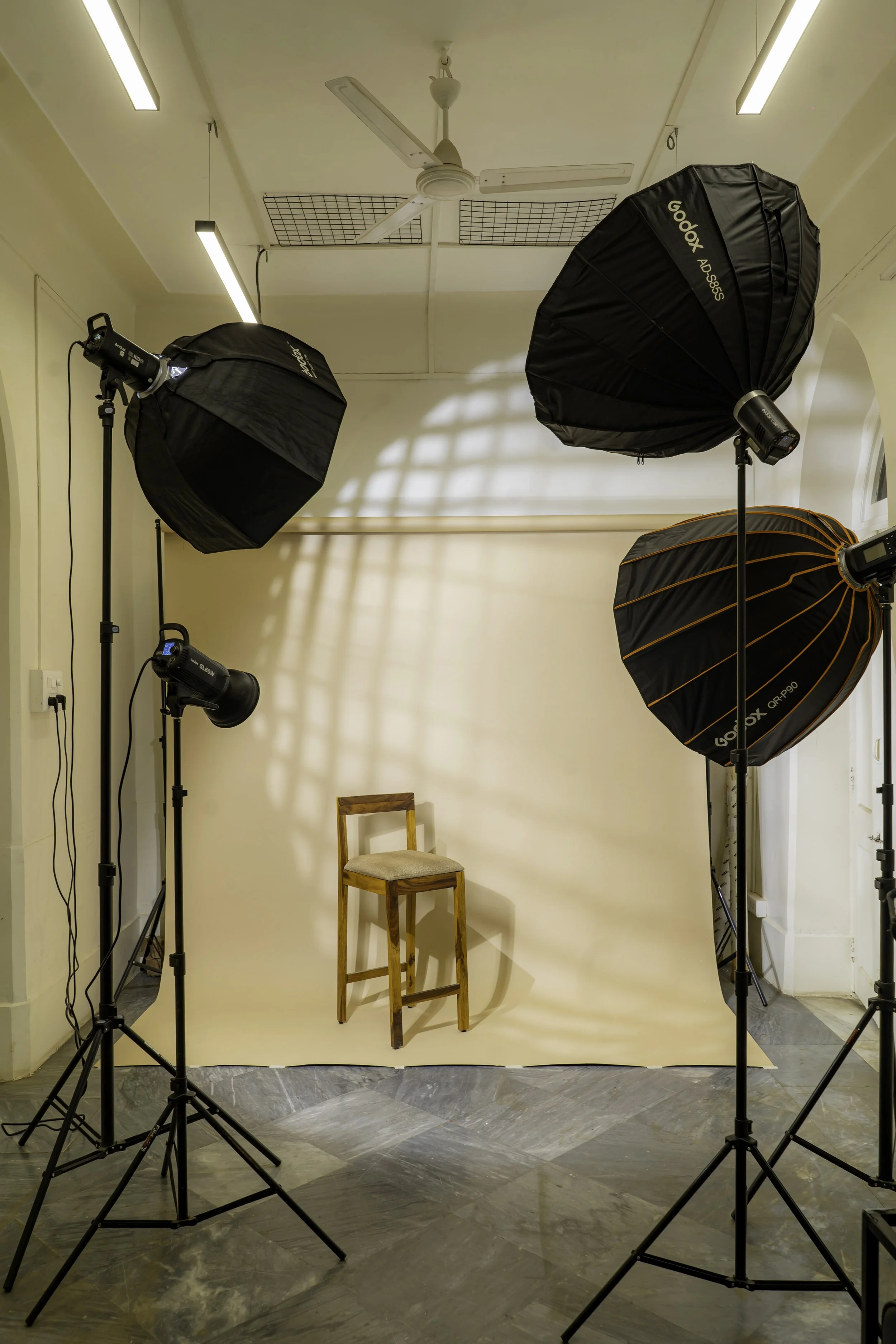
The layout was developed through targeted internal reconfiguration rather than extensive structural removal. Enclosed cabins and studio-support spaces were inserted where structurally viable, while larger original rooms were adapted into collaborative work areas and leadership cabins. The in-house photography studio was accommodated within the deeper-volume zones of the plan, allowing controlled lighting and acoustic treatment without disturbing the primary structure.
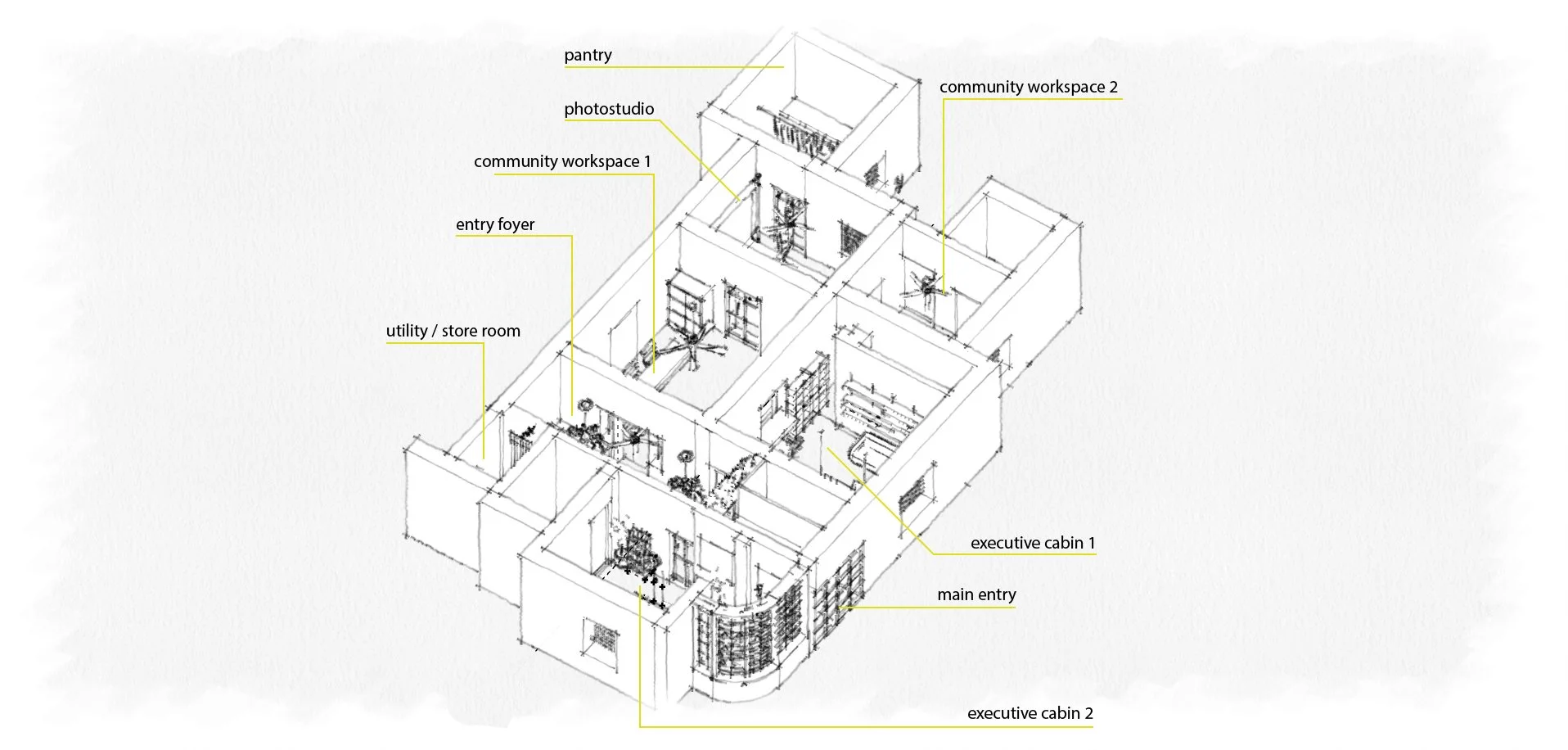
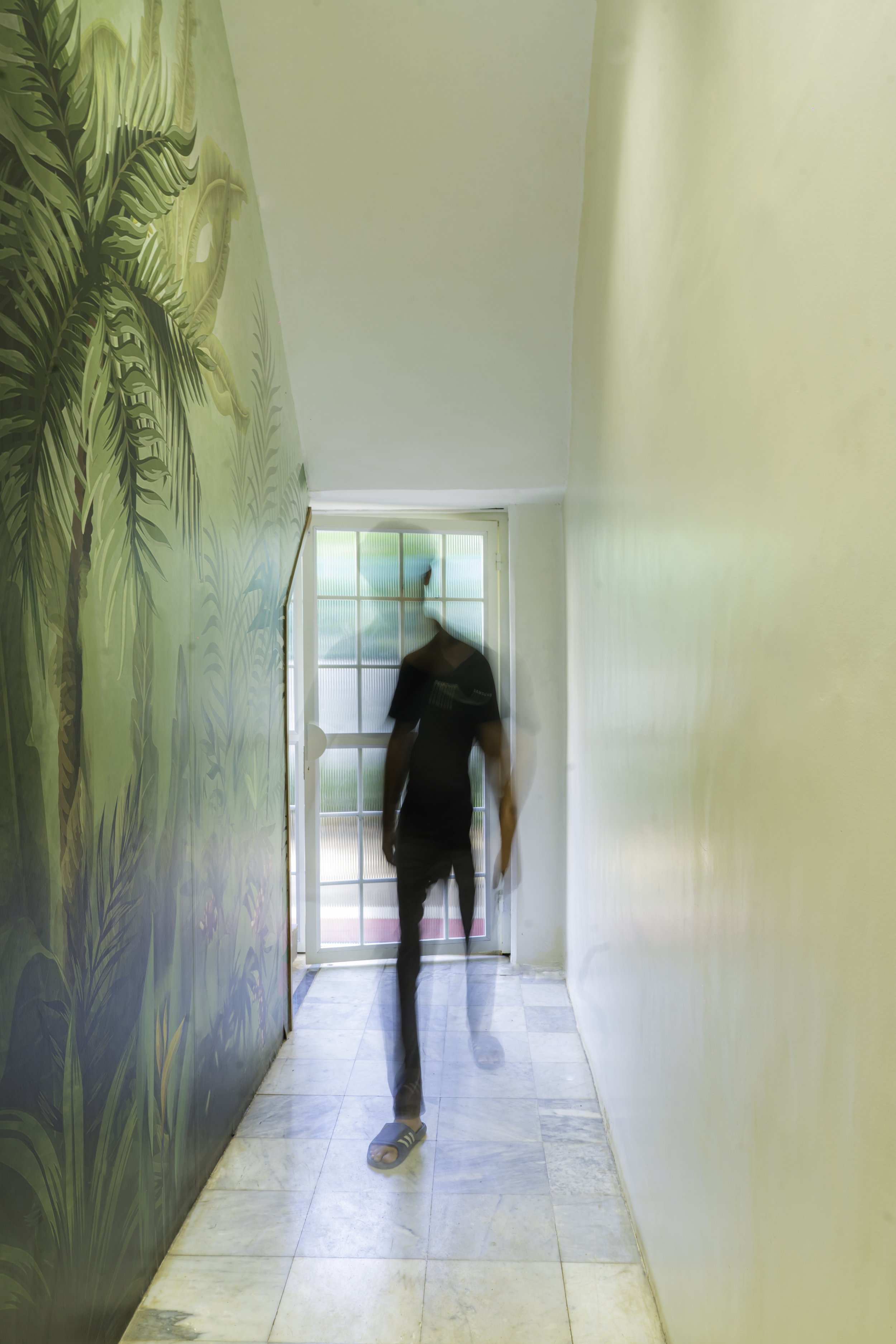
A key sustainability and heritage-driven move was the retention of the original flooring across most parts of the bungalow. The existing floors were restored and integrated into the new office language, carrying forward the patina and texture of the old home. New flooring was introduced only within newly created cabins and enclosed rooms, clearly distinguishing contemporary insertions from preserved zones.


Original exterior windows were repaired and partially restored instead of replaced. In one of the executive cabins, the restored window bay became the anchor for a dedicated discussion nook — a light-filled conversational zone that leverages the bungalow’s deep sill and garden-facing orientation. This gesture transforms a legacy architectural feature into an active workspace element.

Interior additions follow a warm, minimal material palette — wood, muted color backdrops, soft lighting, and clean-lined furniture — allowing the old structure to remain visually prominent. The result is a workplace that feels rooted, adaptive, and distinctly contextual — a modern creative office that still carries the memory and material honesty of its 1949 origins.